Korean Conception Dream: What Does Taemong Mean?
What Is Taemong? Korean Conception Dreams Explained
Imagine telling your Korean mother that you are pregnant.
She smiles and says:
“I knew it. I had a dream.”
But she isn’t talking about an ordinary dream.
She might be talking about taemong (태몽)—a traditional Korean conception dream associated with the arrival of a baby.
These dreams can feature dragons, pigs, tigers, fruit, flowers, jewels, or other vivid symbols. And interestingly, the pregnant woman doesn’t necessarily have to be the person who dreams it.
A husband, grandmother, relative, or someone close to the family may have the taemong instead.
For international viewers, this can make certain conversations in K-Dramas seem confusing.
So what exactly is taemong?
Quick Answer: Taemong (태몽) is a Korean tradition involving a vivid symbolic dream associated with conception, pregnancy, or the birth of a child. The dream may be experienced by the mother or someone close to the family, and its symbols are traditionally interpreted as clues about the baby’s fortune or characteristics.
What Does Taemong Mean?
The Korean word taemong (태몽) can be broken into two parts:
태 (胎) — womb, fetus, or pregnancy
몽 (夢) — dream
So taemong is commonly translated into English as a conception dream, pregnancy dream, or sometimes a birth dream.
But simply translating the word doesn’t fully explain the tradition.
A taemong isn’t just any dream that happens during pregnancy.
Traditionally, it is remembered as a particularly vivid or symbolic dream connected with the arrival of a child.
The dream may happen before the pregnancy is known, around conception, or during pregnancy.
Sometimes its significance is recognized only later.
A family member might suddenly say:
“That strange dream I had last month must have been your taemong.”
This retrospective interpretation is part of what makes the tradition so interesting.
Who Can Have a Taemong?
This is one of the most distinctive aspects of the tradition.
You might assume that only the pregnant woman can experience a Korean conception dream.
Not necessarily.
A taemong may be dreamed by:
- the mother,
- the father,
- a grandmother or grandfather,
- another relative,
- or occasionally someone close to the family.
In other words, the dream can be understood as belonging to the baby or family, rather than exclusively to the person who actually dreamed it.
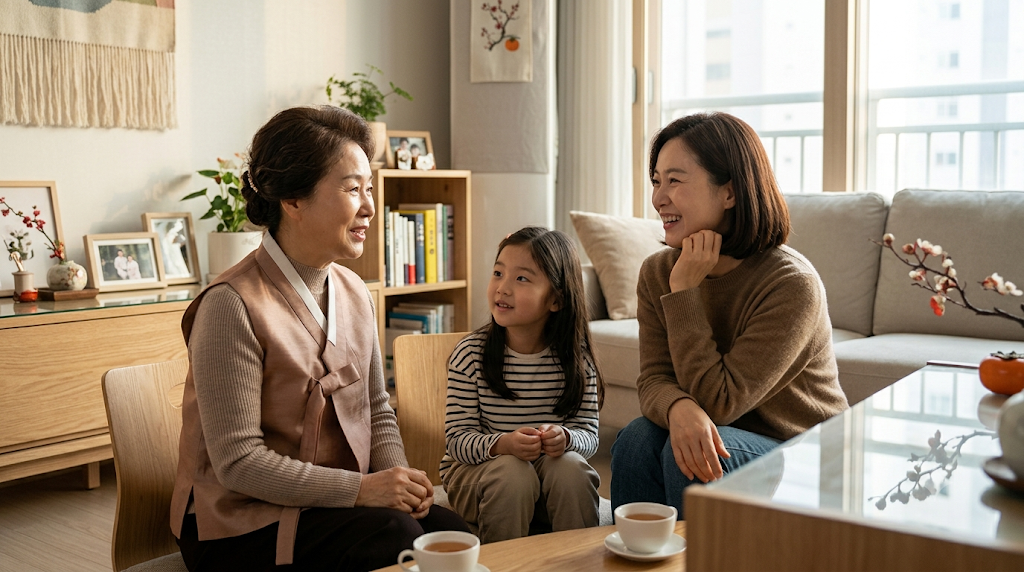
That also helps explain why taemong stories can become family stories.
A grandmother might remember the dream she had before her grandchild was born decades later.
The child grows up hearing:
“Do you know what your taemong was?”
And the answer becomes part of their personal family history.
What Appears in a Korean Conception Dream?
Taemong stories often contain memorable symbols.
Common examples traditionally associated with these dreams include:
Dragons
Powerful and auspicious creatures that may suggest strength, success, or an exceptional future.
Tigers
Traditionally associated with strength, courage, and powerful energy.
Pigs
Strongly connected with wealth, prosperity, and good fortune in Korean culture.
Fruit
Large, ripe, or beautiful fruit can symbolize fertility, abundance, or the arrival of a child.
Flowers
Flowers and plants may be interpreted in relation to beauty, growth, or the baby’s future.
Fish
Large or striking fish can also appear as auspicious symbols.
Jewels and precious objects
Discovering or receiving something valuable may suggest that the coming child is precious or fortunate.
But taemong interpretation isn’t a standardized science.
There isn’t one official dictionary where every dragon, peach, pig, or flower has exactly one guaranteed meaning.
Interpretations can vary between families and storytellers.
The important part is often how vivid, unusual, and memorable the dream feels.
What Does a Dragon Taemong Mean?
Among the many possible symbols, a dragon (용, yong) is especially striking.
Dragons have long been powerful auspicious symbols in Korean and broader East Asian traditions.
A dream involving a dragon rising into the sky, entering a house, approaching the dreamer, or presenting something valuable may therefore be interpreted very positively.
Traditionally, families might associate such a dream with a child destined for success, leadership, or an impressive future.
Of course, that doesn’t mean a dragon dream predicts someone’s career.
The significance is cultural and symbolic.
But imagine growing up hearing:
“Your grandmother dreamed about a dragon before you were born.”
That is quite a family story.

What Does a Pig Taemong Mean?
A pig can be another particularly positive dream symbol.
That makes sense when you understand the pig’s place in Korean culture.
Pigs have traditionally been associated with wealth, fertility, abundance, and good fortune.
A pig appearing in a taemong may therefore be interpreted as an auspicious sign for the coming child.
This connects taemong with another familiar Korean dream tradition.
A vivid pig dream outside pregnancy can also be considered lucky—and may even prompt someone to buy a lottery ticket.
If you’re wondering why the animal has such a positive reputation, the Korean pig dream meaning reveals how pigs became connected with money and prosperity.
Can a Taemong Predict a Baby’s Gender?
Traditionally, people sometimes interpreted taemong symbols as clues about whether a baby would be a boy or girl.
Certain animals, objects, sizes, colors, or characteristics might be interpreted differently.
However, these interpretations are part of folk tradition rather than reliable predictions.
Modern medical technology can determine biological sex far more accurately than dream interpretation.
More importantly, interpretations of particular taemong symbols aren’t always consistent.
Different families may tell you different things.
So when encountering claims such as:
“This taemong always means a boy.”
or
“That fruit always means a girl.”
it’s better to understand them as traditional interpretations rather than fixed rules.
Do Koreans Still Believe in Taemong Today?
Taemong remains culturally familiar in modern Korea.
But familiarity and literal belief aren’t the same thing.
Some Koreans may take conception dreams seriously.
Others treat them as an interesting family tradition.
And some may not believe in dream interpretation at all while still knowing their own taemong story.
That’s what makes the tradition particularly resilient.
It doesn’t necessarily require someone to believe:
“This dream predicted my entire future.”
The story itself can still matter.
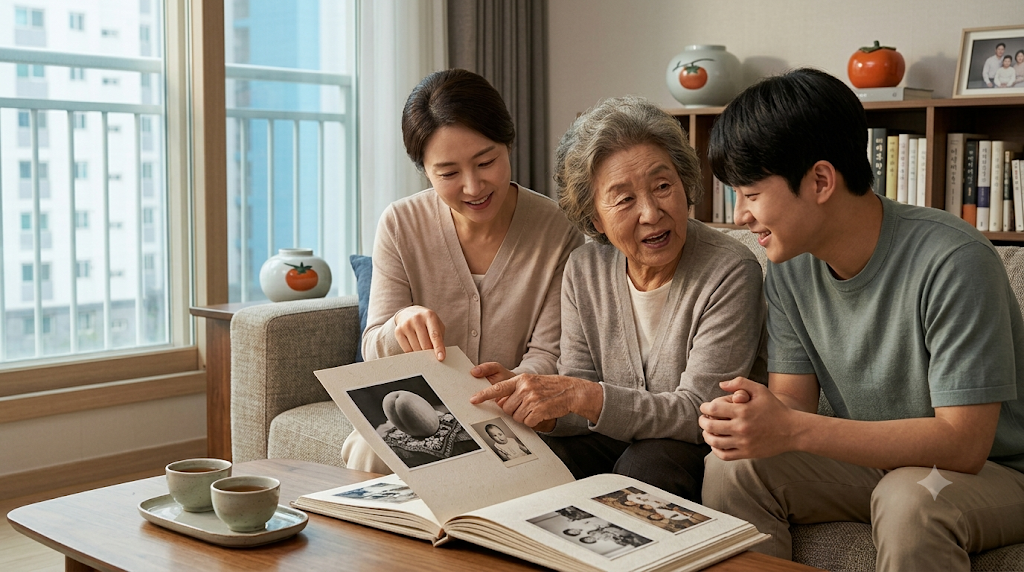
A mother can remember it.
A grandmother can tell it.
A child can grow up hearing it.
Eventually, the dream becomes part of the family’s story about how that person entered the world.
Why Taemong Can Be Confusing in K-Dramas
Imagine this scene:
A character announces a pregnancy.
Her mother suddenly says:
“So that’s what that dream meant!”
Nothing else is explained.
An international viewer might wonder:
What dream?
A Korean viewer may immediately recognize the possibility of taemong.
The same can happen when a character describes dreaming about a dragon, pig, large fruit, or another unusually vivid symbol around the time someone becomes pregnant.
The dialogue may be translated correctly.
But the cultural meaning behind the dream may still disappear in translation.
This is why understanding Korean dream traditions can add another layer to K-Dramas.
Taemong is one example of the broader world of Korean superstitions you still see in K-Dramas, where dreams, numbers, colors, food, and everyday objects can carry meanings international viewers may not immediately recognize.
Is Taemong a Superstition or a Tradition?
Probably both, depending on whom you ask.
Calling taemong simply a superstition can miss an important part of its cultural role.
Yes, interpreting dreams as predictions belongs to folk belief.
But taemong can also function as:
- a pregnancy story,
- a family memory,
- a conversation between generations,
- and part of a person’s personal history.
That distinction matters.
A Korean person doesn’t need to believe that dreams literally predict the future to enjoy hearing the story of their taemong.
In that sense, taemong can survive even as attitudes toward superstition change.
How Is Taemong Different From an Ordinary Lucky Dream?
Korean culture includes other traditions surrounding dreams.
A particularly auspicious dream may be called gil-mong (길몽), meaning a lucky or favorable dream.
For example, dreaming about a pig can be interpreted as a sign of financial good fortune.
Taemong is more specific.
It is connected with conception, pregnancy, or the arrival of a particular child.
So:
Pig dream → potentially a lucky dream
Pig dream connected with pregnancy → potentially a taemong
Context changes the meaning.
That is why two people could dream about the same animal and interpret the dreams very differently.
Frequently Asked Questions
What is taemong in Korean culture?
Taemong (태몽) is a symbolic dream traditionally associated with conception, pregnancy, or the birth of a child. It may be dreamed by the mother or someone close to the family.
What is a Korean conception dream?
A Korean conception dream is commonly called taemong. It is traditionally interpreted as a dream announcing or symbolically representing the arrival of a baby.
Can the grandmother have the baby’s taemong?
Yes. In Korean tradition, the pregnant woman isn’t necessarily the person who experiences the taemong. A father, grandparent, relative, or someone close to the family may have the dream.
What animals appear in taemong?
Traditional taemong stories can include dragons, tigers, pigs, fish, and other animals, as well as fruit, flowers, jewels, and other memorable objects.
Do Koreans still believe in taemong?
Belief varies. Some people take taemong seriously, while others treat it primarily as a family tradition or interesting cultural story.
Final Thought
Taemong is about more than trying to predict a baby’s future.
It can begin with something as simple as a strange dream.
A dragon rises into the sky.
Someone receives an enormous piece of fruit.
A pig enters the house.
At the time, the dream may mean nothing.
Then someone discovers they are pregnant.
Suddenly, the family remembers.
“That must have been the baby’s taemong.”
Years later, the child may still hear the story.
And that is perhaps the most interesting part of the Korean conception dream tradition.
The dream doesn’t simply predict a new member of the family.
It can become part of the story of how that person entered the family in the first place.