The Scandal: 7 Joseon Culture Details International Viewers Should Know
Netflix’s The Scandal is built around seduction, reputation, and dangerous desire.
But understanding The Scandal Joseon culture makes those relationships much more interesting.
The story reimagines Dangerous Liaisons in Joseon-era Korea, where a person’s gender, family background, marital status, and reputation could shape what society expected them to do.
That means the historical setting isn’t simply beautiful hanbok and hanok architecture.
It changes the stakes of the story.
Quick Answer: To understand The Scandal, international viewers should know how Joseon society viewed yangban status, women’s roles, gendered living spaces, widowhood, concubines, birth status, and sexual reputation. These rules help explain why private desire can become a public scandal.
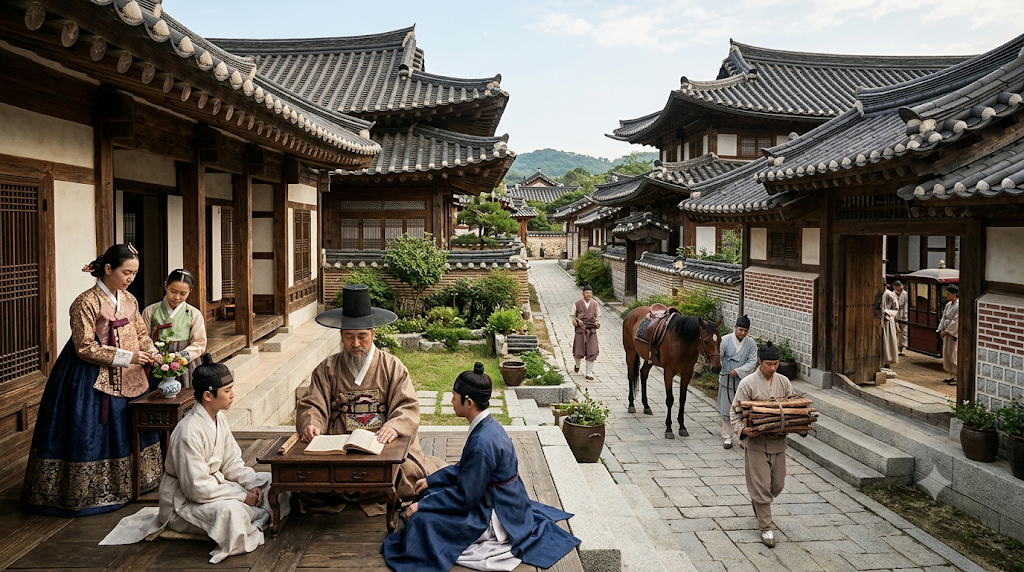
1. Joseon High Society Was Built Around Status
One of the first things to understand about The Scandal Joseon culture is the importance of social hierarchy.
The drama focuses on people living within elite Joseon society.
One term international viewers frequently encounter in historical K-Dramas is yangban (양반).
Yangban were associated with the elite status order of Joseon society, particularly families connected with Confucian education, government service, and social prestige.
Being part of an elite family could provide enormous advantages.
But it also came with expectations.
Family reputation mattered.
Marriage mattered.
Lineage mattered.
Proper behavior mattered.
A scandal involving one member of an elite household therefore wasn’t necessarily seen as a purely private problem.
It could affect the reputation of the wider family.
For international viewers, that’s an important shift in perspective:
Reputation wasn’t only personal. It could be familial and social.
To understand what it meant to be yangban in Joseon Korea, it helps to look beyond wealth and explore how education, government service, family lineage, and social reputation shaped elite status.
2. Elite Women Faced Different Rules Than Men
Gender is essential to understanding the drama’s social world.
Joseon society was strongly influenced by Neo-Confucian ideas about family order and appropriate roles for men and women, particularly as those norms became increasingly institutionalized.
Elite women were expected to fulfill responsibilities connected with marriage, household management, children, family continuity, and proper conduct.
Men generally had much greater access to public life, formal education, government service, and social activity.
That doesn’t mean Joseon women had no agency.
Real lives were more complicated than a list of social rules, and women’s experiences varied according to period, class, family, and circumstance.
But the expectations were clearly unequal.
That matters when a historical drama presents an intelligent noblewoman who wants something beyond the role society has prepared for her.
Her conflict isn’t simply:
“People don’t appreciate me.”
The deeper question is:
“What is a woman of my position actually allowed to become?”
3. The “Women’s Quarters” Were More Than a Room
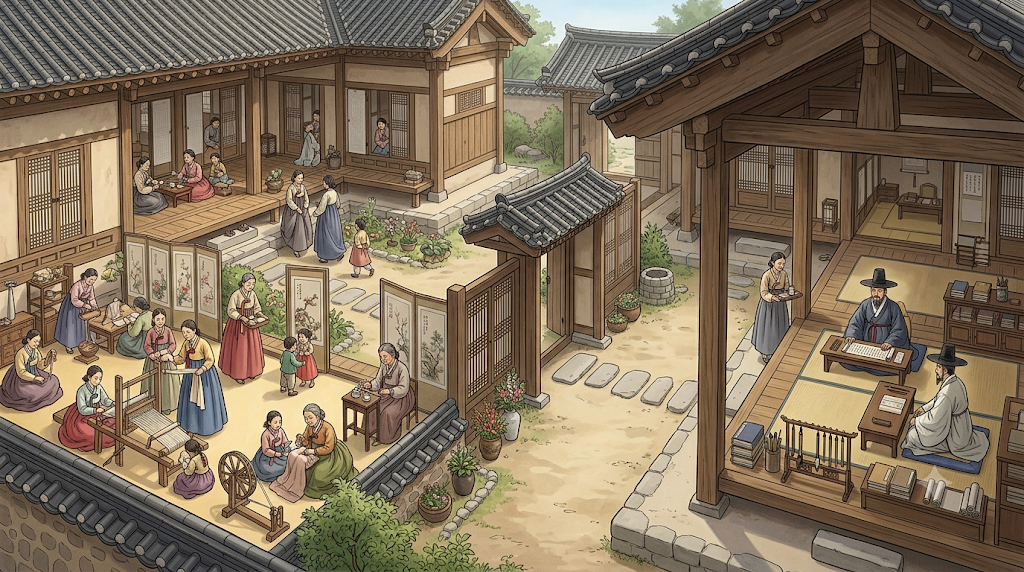
Historical K-Dramas frequently show men and women occupying different areas of a large traditional house.
That visual detail reflects something important about elite domestic life.
The anchae (안채) was the inner part of a traditional Korean house associated particularly with women and domestic family life.
The sarangchae (사랑채) was generally associated with the male head of the household and activities such as study, receiving male guests, and more public-facing social interaction.
The exact organization of a house varied.
But the broader idea is important:
Physical space could reflect social expectations.
The women’s quarters weren’t simply a random room where female characters happened to spend their time.
They represented a broader distinction between domestic and public spheres.
So when a historical story portrays a noblewoman who refuses to remain confined to the expected female space, the image can work on two levels.
She is crossing a physical boundary.
She may also be challenging a social one.
To see how architecture reinforced these expectations, explore women’s quarters in Joseon Korea and the difference between the anchae and sarangchae in an elite traditional home.
4. Widowhood Could Change a Woman’s Social Position
A widow in a Joseon historical drama isn’t simply a woman whose husband has died.
Her marital status can carry additional cultural meaning.
As Neo-Confucian family ideals became increasingly influential, widow chastity became an important virtue in Joseon society.
A woman who remained faithful to her deceased husband could be praised.
Remarriage, particularly for women from elite families, became increasingly stigmatized and restricted.
To understand why widow remarriage became difficult in Joseon Korea, it helps to look at how Confucian ideals of chastity, family lineage, and social status developed over time.
This is an area where historical nuance matters.
Joseon lasted for more than five centuries, and attitudes and regulations did not remain identical throughout the entire dynasty.
Nor should we assume every widow followed elite ideals exactly.
Still, the cultural expectation became powerful enough that widowhood could significantly shape a woman’s social choices.
That changes how an international viewer should interpret romance involving a widowed noblewoman.
A new relationship might risk more than heartbreak.
It could threaten:
- personal reputation,
- family reputation,
- expectations of chastity,
- social standing.
The same romantic behavior could therefore carry very different consequences for men and women.
5. A Concubine Was Not Simply a Second Wife
This is one of the easiest Joseon concepts for international viewers to misunderstand.
English subtitles often use the word “concubine.”
Modern viewers may interpret that as:
second wife
or even:
mistress.
Neither translation fully explains the social position.
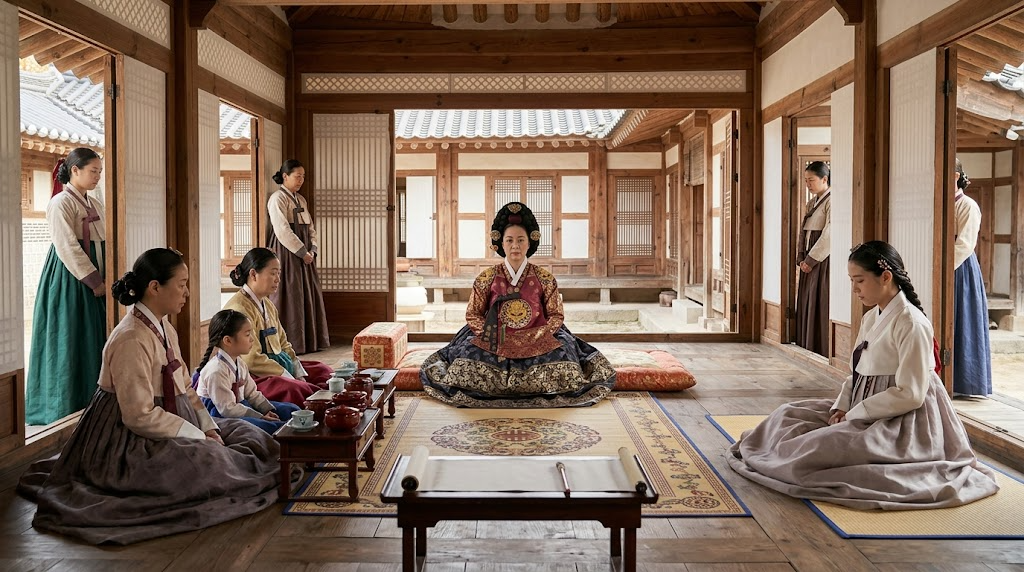
A Joseon concubine, commonly referred to as cheop (첩), did not hold the same status as a man’s principal wife.
The distinction could affect the woman’s place within the household as well as questions involving family lineage and her children.
This wasn’t simply a romantic hierarchy.
It was connected to the structure of the family.
That’s why a historical K-Drama conflict between a principal wife and concubine shouldn’t automatically be reduced to:
“Two women are fighting over the same man.”
Status is part of the story.
Korelogue already has a detailed guide explaining what a concubine was in Joseon Korea, including the difference between a principal wife and concubine and how maternal status could affect children.
6. Who Your Mother Was Could Affect Your Status
This is another concept that explains many family conflicts in historical K-Dramas.
Two boys could share the same father and still occupy different positions within the family hierarchy.
You may encounter terms such as:
Jeokja (적자 / 嫡子) — broadly, a legitimate son born to the principal wife.
Seoja (서자 / 庶子) — a son born to a concubine.
The exact historical categories surrounding birth status can become more complicated, particularly when discussing seo-eol (서얼) and changes across the Joseon period.
But international viewers don’t need to memorize every legal distinction to understand the basic dramatic significance.
A child’s maternal status could affect how others viewed his place in the family and, historically, could influence social and official opportunities.
Suddenly, a common historical K-Drama question makes much more sense:
“Who was his mother?”
To modern viewers, that might sound like gossip.
In a Joseon context, it could be a question about lineage, legitimacy, status, and opportunity.
To understand the difference between jeokja and seoja, it helps to look at how a mother’s position could shape her son’s family status, inheritance prospects, and access to opportunities in Joseon Korea.
7. Desire Wasn’t Just a Private Matter
This may be the most useful cultural idea to remember while watching The Scandal.
Modern romance stories often frame desire around:
What do I want?
Joseon high society added another question:
What am I socially allowed to want?
For an elite woman, sexuality could be tied to reputation and family expectations.
For a widow, another relationship could conflict with ideals of chastity.
Marriage could involve lineage and family interests rather than personal attraction alone.
And men and women could face very different consequences for similar behavior.
This makes Joseon an especially interesting setting for a story derived from Dangerous Liaisons.
The original story already revolves around seduction, manipulation, reputation, and desire.
The Joseon setting adds another layer:
a society with rules governing who should desire whom—and what might happen when those rules are broken.
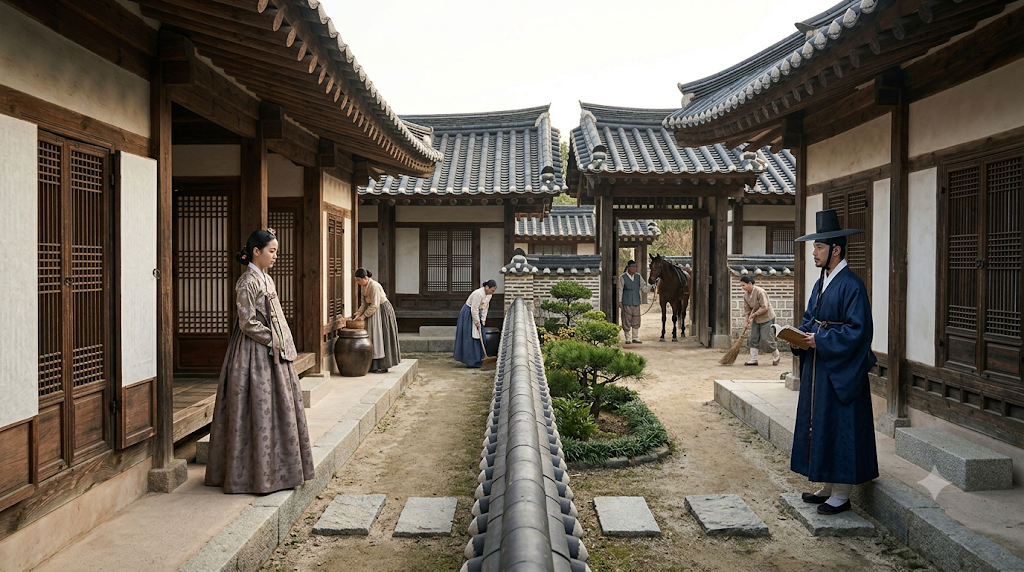
Why Joseon Changes the Meaning of The Scandal
The Scandal reimagines Pierre Choderlos de Laclos’s 1782 French novel Les Liaisons dangereuses, commonly known in English as Dangerous Liaisons.
The story has been adapted many times.
Korean audiences may also recognize the connection with the 2003 film Untold Scandal, which similarly transported the premise into Joseon Korea.
What makes the setting effective is that the themes fit naturally into a society deeply concerned with status and reputation.
Desire remains desire.
Jealousy remains jealousy.
Manipulation remains manipulation.
But the consequences change when the characters live inside a culture structured around family hierarchy, gender expectations, marital status, and social standing.
For an international viewer, understanding The Scandal Joseon culture adds another layer to scenes that might otherwise appear to be straightforward romantic conflict.
Is The Scandal Historically Accurate?
A historical K-Drama is not a documentary.
Costumes, characters, relationships, timelines, and social interactions may be changed or dramatized for storytelling.
That means viewers shouldn’t automatically assume:
“I saw this in a K-Drama, so everyone in Joseon behaved this way.”
Instead, a historical drama can be treated as a starting point.
When a scene makes you wonder:
Why can’t this woman simply remarry?
Why does the mother’s status matter?
Why are men and women using different parts of the house?
Why isn’t the concubine treated like another wife?
those questions lead to the real cultural context behind the drama.
That’s where understanding Korean historical drama culture becomes more useful than simply asking whether every scene is historically exact.
What International Viewers Should Remember
You don’t need to memorize Joseon law before watching The Scandal.
Remember these seven ideas:
- Elite society cared deeply about status and family reputation.
- Men and women lived under unequal social expectations.
- Household architecture could reflect gender roles.
- Widowhood could place strong expectations on women.
- A concubine did not have the same status as the principal wife.
- A mother’s position could affect her children’s status.
- Desire could have social consequences far beyond romance.
Once you recognize these ideas, the historical setting stops being decoration.
It becomes part of the plot.
Frequently Asked Questions
What Joseon culture should I know before watching The Scandal?
The most useful concepts are yangban social hierarchy, gender roles, women’s quarters, widow chastity, the difference between principal wives and concubines, and the importance of family lineage.
What were women’s quarters in Joseon Korea?
In elite traditional homes, the anchae was the inner domestic area associated particularly with women and family life, while spaces such as the sarangchae were more closely associated with male household and guest activities.
Why was widowhood important in Joseon society?
Neo-Confucian ideals increasingly praised widows who remained faithful to deceased husbands, while remarriage—especially among elite women—could face social stigma and restrictions.
Was a concubine a second wife in Joseon Korea?
Not exactly. A concubine occupied a different and generally subordinate position to the principal wife, and the distinction could affect family status and children.
What are jeokja and seoja?
Jeokja (적자) generally refers to a son born to the principal wife, while seoja (서자) refers to a son born to a concubine. These distinctions mattered within Joseon family and social structures.
Final Thought
Beautiful hanbok, tiled hanok roofs, and candlelit rooms make Joseon historical dramas visually distinctive.
But those aren’t the details that make The Scandal truly dangerous.
The danger comes from the rules underneath them.
A woman’s reputation.
A widow’s expected chastity.
A family’s lineage.
The difference between wife and concubine.
The boundary between the women’s quarters and the public world.
Understanding The Scandal Joseon culture means recognizing that the characters aren’t simply deciding whom they love.
They’re navigating a society that has already decided what people of their gender, status, and family position are supposed to do.
And once you understand those rules, you can better understand what makes breaking them a scandal.