What Was a Concubine in Joseon Korea?
Imagine watching a historical K-Drama set during the Joseon Dynasty.
A wealthy man already has a wife.
Then another woman enters the household.
The subtitles call her his “concubine.”
She may live with him, have his children, and become deeply involved in the family.
So was she simply a second wife?
Not exactly.
A Joseon concubine occupied a very different legal and social position from a man’s primary wife. And that difference could affect not only the woman herself, but also her children and their place within the family.
Understanding that distinction explains a surprising amount of conflict in Korean historical dramas.
Quick Answer: In Joseon Korea, a concubine (첩, cheop) was a recognized female partner who did not hold the same status as the principal wife (처, cheo). Her position was subordinate to that of the wife, and children born to concubines could face significant social and legal disadvantages.
Was a Joseon Concubine the Same as a Second Wife?
This is probably the most important misconception to clear up.
A concubine was not simply another wife of equal status.
In a Joseon household, there was an important distinction between the principal wife and a concubine.
The principal wife was connected to the formal marriage relationship and occupied the legitimate position within the household.
A concubine did not have equal standing.
That distinction mattered enormously in a society where family lineage, inheritance, ritual obligations, and social status were closely connected.
So when a historical K-Drama shows tension between a wife and a concubine, the conflict isn’t necessarily just:
“Two women love the same man.”
There is an entire social hierarchy behind the relationship.
The wife and concubine did not enter the household on equal terms.
What Is the Korean Word for Concubine?
One common Korean term is:
첩 — cheop — concubine
The principal wife could be referred to as:
처 — cheo — wife
You may also encounter the distinction between 처 (妻) and 첩 (妾) when reading about Joseon family structure.
But historical terminology can become complicated depending on period, status, and context.
This is particularly important when discussing the royal family.
A king’s royal consorts and the concubines of ordinary or elite households existed within different institutional structures.
So translating every historical Korean female partner simply as “concubine” can hide important differences.
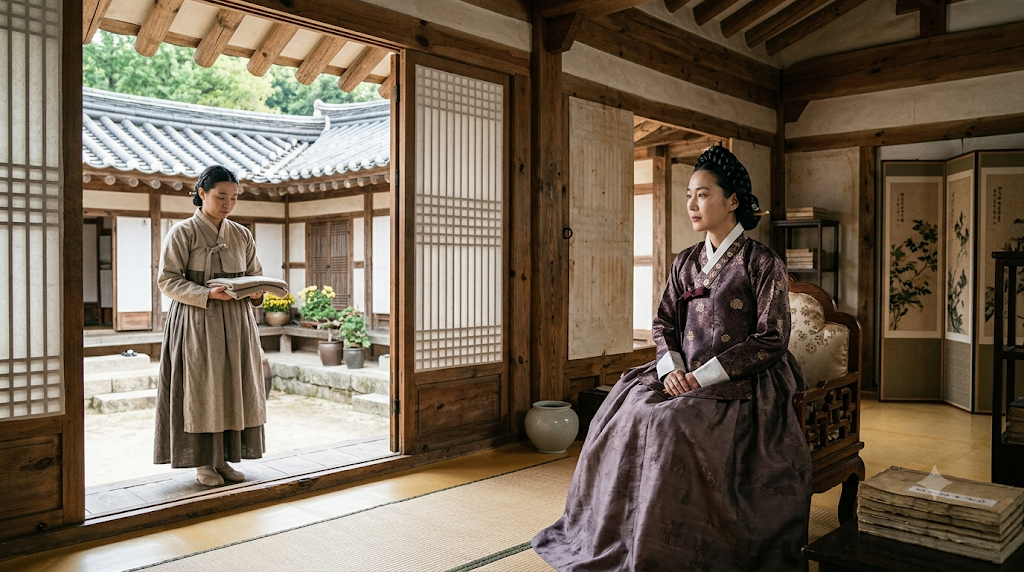
Why Did Men Have Concubines in Joseon Korea?
There wasn’t one single reason.
One major factor was the importance of continuing the family line.
Joseon society placed enormous importance on descent, particularly within elite families.
Producing male descendants mattered because sons were connected to lineage continuity, inheritance, and ancestral rites.
If a marriage did not produce a son, taking a concubine could become one way of attempting to produce a male heir.
But lineage was not the only factor.
Concubinage was also connected with wealth, social position, household structure, and male privilege.
The ability to support additional members of a household itself reflected economic and social circumstances.
This is why concubinage should not be understood simply as a romantic arrangement.
It existed inside a patriarchal family system with clearly unequal positions.
What Happened to the Children of Concubines?
This is where the distinction becomes especially important.
Children born to a principal wife and children born to a concubine did not necessarily enjoy the same social position.
You may encounter two important terms when watching or reading about Joseon history:
Jeokja (적자 / 嫡子) — a legitimate son born to the principal wife.
Seoja (서자 / 庶子) — a son born to a concubine.
That distinction could follow a person well beyond childhood.
During Joseon, restrictions associated with birth status could affect opportunities for advancement, including access to parts of the state bureaucracy.
This historical discrimination is often discussed in connection with the term seo-eol (서얼), referring broadly to descendants born outside the principal-wife line within elite families, though the terminology and categories require more nuance than subtitles often provide.
This gives us one of the most important lessons for understanding historical K-Dramas:
Having the same father did not necessarily mean having the same status.
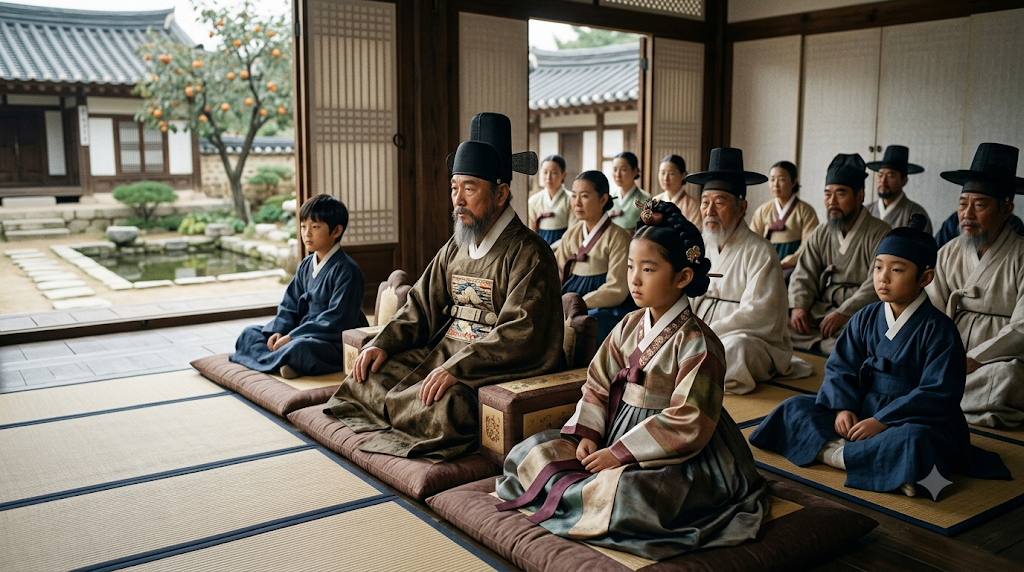
Could a Concubine’s Son Become the Family Heir?
This question doesn’t have a simple yes-or-no answer.
A son born to a concubine was still biologically the father’s child.
But Joseon family organization strongly privileged the line of the principal wife.
That meant a concubine’s son did not automatically receive the same position as a son born to the wife.
Questions of succession could become especially complicated when a principal wife had no son.
Family lineage rules, adoption practices, social status, and changing laws all affected what could happen.
This is why historical dramas can build enormous tension around the birth of a son.
To a modern viewer, characters may appear strangely obsessed with:
“Who is his mother?”
In Joseon society, that question could directly affect a child’s status and future.
Could a Concubine Become the Principal Wife?
This is another area where modern assumptions can cause confusion.
A viewer might expect the story to work like this:
The wife dies.
The man already loves his concubine.
Therefore, the concubine simply becomes his new principal wife.
Historically, it was not necessarily that simple.
Joseon law and Neo-Confucian family norms emphasized distinctions between wife and concubine, particularly among the elite.
A concubine’s lower position was not merely an informal family ranking that could always be erased because circumstances changed.
This is why the phrase “she’s basically his second wife” can be misleading.
The distinction between wife and concubine was structural.
Was Every Joseon Concubine Poor?
No.
This is another stereotype worth avoiding.
Women who became concubines could come from different backgrounds.
Social status mattered enormously in Joseon society, and some concubines came from lower-status groups.
But it would be inaccurate to imagine every concubine as an impoverished servant who entered the household through exactly the same path.
Individual circumstances varied.
What they shared was not necessarily the same background.
What mattered was their position relative to the principal wife.
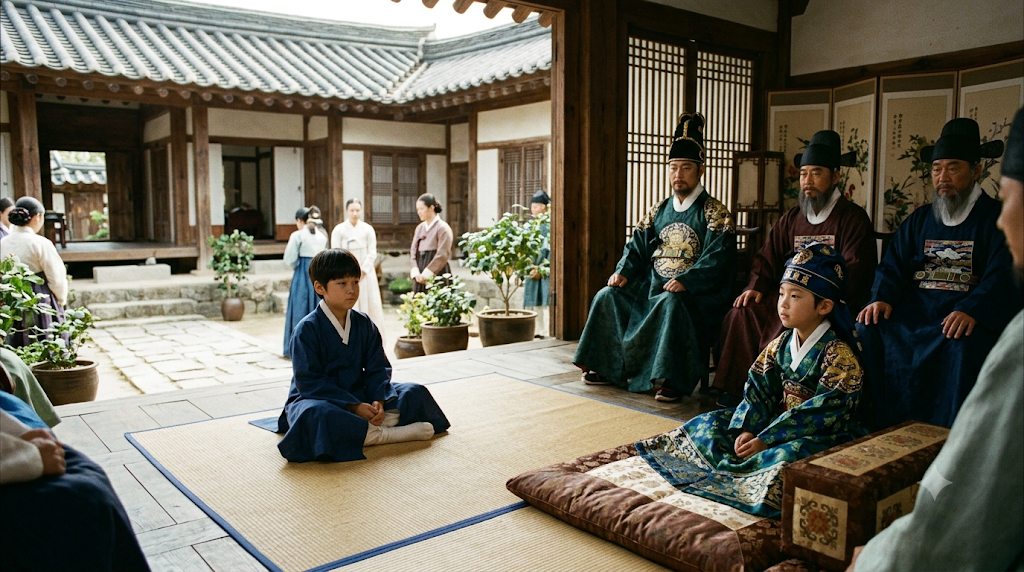
Was a King’s Concubine the Same Thing?
Not exactly.
This distinction is especially useful when watching palace K-Dramas.
Royal women lived within a formal palace hierarchy.
The king’s principal wife was the queen (왕비, wangbi).
Royal consorts below the queen could hold officially defined ranks and titles within the palace system.
English subtitles often translate these women as “royal concubines.”
That translation is understandable, but it can make viewers assume that a royal consort and a private household concubine occupied essentially the same kind of position.
They did not.
The palace had its own hierarchy, titles, political dynamics, and institutional rules.
A royal consort could become extremely influential—especially if she gave birth to a prince.
And if her son eventually became king, her historical significance could become enormous.
So when watching a palace drama, remember:
Queen vs. royal consort
and
principal wife vs. household concubine
are related concepts of hierarchy, but they shouldn’t be treated as completely interchangeable.
Why Do Concubines Cause So Much Conflict in Historical K-Dramas?
Now the classic K-Drama plot makes more sense.
A concubine gives birth to a talented son.
The principal wife has her own son.
The father favors one child.
The household begins fighting.
To an international viewer, this can look like ordinary jealousy.
But underneath the drama are much bigger questions:
Who belongs to the legitimate family line?
Who can inherit?
Whose mother has higher status?
What opportunities will each son have?
Who performs the family’s ancestral obligations?
The emotional conflict may be fictionalized.
The importance of lineage and maternal status was not.
This is why understanding Joseon family structure can completely change how you interpret a historical K-Drama.
Was Concubinage Normal for Every Joseon Man?
No.
Historical dramas can create a distorted impression because they disproportionately focus on kings, aristocrats, wealthy families, and politically powerful households.
Maintaining a concubine required resources.
Social class and economic circumstances mattered.
So you shouldn’t watch a palace drama filled with queens, royal consorts, princes, and elite officials and conclude:
“Every Korean man in Joseon had several women.”
Historical dramas focus on unusual and powerful people precisely because their lives generate dramatic stories.
The existence of concubinage was real.
Its portrayal on television is selective.
What Historical K-Dramas Often Simplify
Historical dramas are entertainment, not documentaries.
They may compress complicated family structures into easily understood relationships.
A subtitle might use “wife,” “second wife,” “mistress,” or “concubine” even when the historical Korean terminology carries more specific implications.
Characters may also behave according to the needs of a modern drama rather than precisely following social conventions from a particular century.
That doesn’t make historical K-Dramas useless for learning about Korean history.
Quite the opposite.
They can be excellent starting points.
The important thing is to ask:
“What historical system is this scene referring to?”
rather than assuming every detail on screen is historically exact.
Why This Matters for The Scandal
A drama set in Joseon Korea can use marriage, widowhood, concubinage, and social status as much more than background decoration.
These rules determine what characters are allowed to do—and what happens when they break those expectations.
That’s why understanding the position of a Joseon concubine before watching a historical romance can make relationships that initially seem confusing much easier to understand.
The drama may be telling a love story.
But the characters are living inside a social system where love and legal status are not necessarily the same thing.
And that difference is often where the real conflict begins.
Frequently Asked Questions
Was a concubine a wife in Joseon Korea?
Not in the same sense as the principal wife. A concubine could have a recognized relationship with a man and bear his children, but she did not hold equal status with his principal wife.
What was a concubine called in Korean?
A common term is cheop (첩 / 妾). The principal wife could be distinguished as cheo (처 / 妻).
Were children of concubines legitimate?
They were recognized as the father’s children, but birth to a concubine could place them in a lower social and legal category than children born to the principal wife.
What is a seoja in Joseon Korea?
Seoja (서자 / 庶子) generally refers to a son born to a concubine, in contrast with jeokja (적자 / 嫡子), a legitimate son born to the principal wife.
Could a Joseon concubine become the legal wife?
The distinction between wife and concubine was strongly regulated by Joseon family norms and law, especially among elite families. A concubine could not simply be treated as an equal principal wife because the original wife was absent or had died.
Were royal concubines different from ordinary concubines?
Yes. Women usually translated as royal concubines or royal consorts existed within an official palace hierarchy with ranks and titles. Their situation should not be treated as identical to that of concubines in private households.
Final Thought
When a historical K-Drama introduces a concubine, it’s tempting to think:
“She’s the second wife.”
But that misses the most important part of the story.
In Joseon Korea, the difference between a wife and a concubine was tied to status, lineage, children, inheritance, and social opportunity.
Two sons could share the same father and still enter the world with different expectations because their mothers held different positions.
That’s why one seemingly simple question appears again and again in Korean historical stories:
“Who was his mother?”
In Joseon society, the answer could shape an entire life.