Jeokja vs. Seoja: Why Birth Status Mattered in Joseon Korea
Two boys have the same father.
They grow up in the same household.
Both may be intelligent, ambitious, and loved by their family.
Yet in a historical K-Drama, one son may be treated as the family’s legitimate heir while the other repeatedly hears a painful reminder:
“Your mother was a concubine.”
Why should that matter if they share the same father?
The answer involves jeokja vs seoja, one of the most important family-status distinctions for understanding Joseon-era Korean dramas.
In Joseon society, a child’s position could be shaped not only by who his father was, but also by the status of his mother.
That could affect how the child was viewed within the family and, historically, could influence opportunities outside the household as well.
Quick Answer: In a simplified Joseon context, jeokja (적자) generally refers to a son born to a man’s principal wife, while seoja (서자) refers to a son born to a concubine. Because the principal wife and concubine did not hold equal family status, their sons could also occupy different positions. The historical system was more complicated than these two terms alone, but the distinction helps explain many inheritance, lineage, and status conflicts in Korean historical dramas.
What Does Jeokja Mean?
Jeokja (적자 / 嫡子) generally refers to a legitimate son born to a man’s principal wife.
The key idea is not simply that the father recognized the child.
The mother’s marital status mattered.
Within the formal family structure, the principal wife occupied a higher position than a concubine.
Her children therefore held a different status from children born to women of concubine status.
For international viewers, this can feel strange.
Modern audiences may naturally think:
“They have the same father, so why aren’t they treated equally?”
But Joseon family organization placed enormous importance on legitimate lineage.
The identity of the mother was therefore not a minor detail.
It could help determine a son’s place within the family structure.
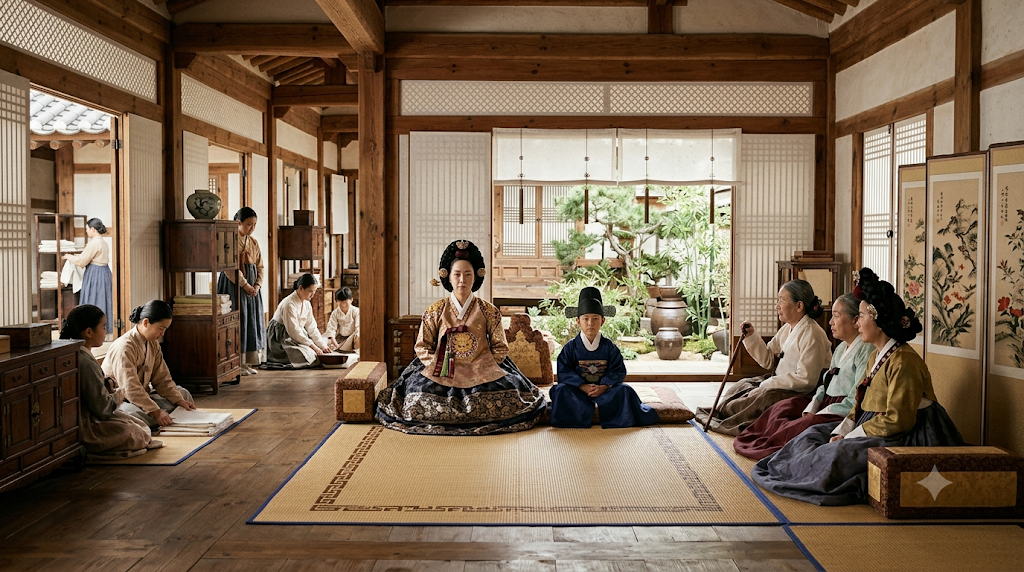
What Does Seoja Mean?
Seoja (서자 / 庶子) generally refers to a son born to a concubine.
Again, this does not mean that the father was necessarily unknown or that the child existed outside the household.
A seoja could be the acknowledged son of an elite man.
He could grow up knowing exactly who his father was.
He could belong to the household.
He could be educated.
He could be talented.
But his mother’s lower status within the family could affect his own position.
This is why historical K-Dramas sometimes show a character with an apparently contradictory identity.
He may be:
the son of an important official,
raised in a prestigious household,
well educated,
and still treated as socially inferior to his half-brother.
The contradiction disappears once you understand jeokja vs seoja.
They share a father.
They do not share the same maternal status.
The distinction becomes much easier to understand once you know what a concubine was in Joseon Korea, because a principal wife and concubine did not occupy equal positions within the household.
Why Did the Mother’s Status Matter?
To understand this system, it helps to stop thinking of marriage only as a romantic relationship.
In elite Joseon society, marriage helped organize:
family lineage, household status, descendants, inheritance, and ancestral continuity.
The principal wife held the formally recognized position within that structure.
A concubine occupied a subordinate position.
That difference could extend to their children.
This is why the question:
“Who was his mother?”
can carry enormous weight in a historical K-Drama.
Modern viewers may hear gossip.
Joseon characters may hear information about lineage and status.
A character’s mother could therefore influence how relatives, officials, marriage partners, and other members of society viewed him.
Was Seoja the Same as an Illegitimate Child?
Not exactly.
The English word “illegitimate” is sometimes used because it gives international readers a quick way to understand the unequal status.
But it can also create the wrong impression.
A seoja was not necessarily a secret child born from an affair and hidden from the father’s family.
Concubinage itself existed within the historical family system.
A man could acknowledge children born to a concubine.
The issue was that those children did not have the same status as children born to the principal wife.
So rather than imagining:
legitimate child vs. unknown child
it is often more useful to think:
different recognized positions within a hierarchical family system.
That distinction makes many historical K-Drama families easier to understand.
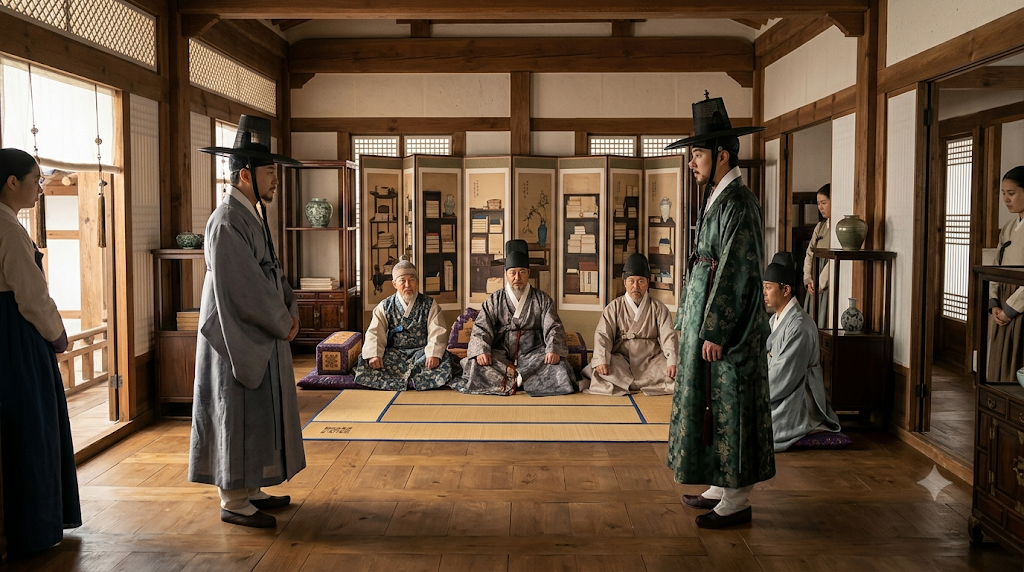
What Is Seoeol?
This is where the terminology becomes more complicated.
Viewers researching Joseon birth status may also encounter the word seoeol (서얼 / 庶孽).
It is important not to treat every historical category as interchangeable.
Broadly, seoeol was used for descendants whose status was affected by birth outside the principal-wife line, but historical distinctions could depend on the mother’s own social status.
Terms such as seo (서) and eol (얼) could distinguish children according to whether their mothers came from free or lower-status backgrounds.
The terminology and legal consequences also changed across Joseon’s long history.
For most international K-Drama viewers, however, the essential idea is:
Not all recognized sons of the same father automatically held equal social status.
If you’re watching a drama rather than conducting specialized historical research, understanding that principle is usually more useful than memorizing every subcategory.
Could a Seoja Become the Family Heir?
This is where family conflict becomes especially dramatic.
The principal-wife line was privileged within Joseon’s patrilineal family structure.
That made sons born to the principal wife especially important for succession and ancestral continuity.
A son born to a concubine could therefore face disadvantages even if he was:
older,
more intelligent,
more capable,
or more favored by his father.
Imagine a K-Drama family with two sons.
The older son is born to a concubine.
The younger son is born to the principal wife.
A modern viewer might naturally assume:
“The older son should inherit because he was born first.”
But birth order alone does not explain the hierarchy.
The mother’s position also matters.
This creates one of the classic tensions of historical family drama:
personal ability vs. socially recognized birth status.
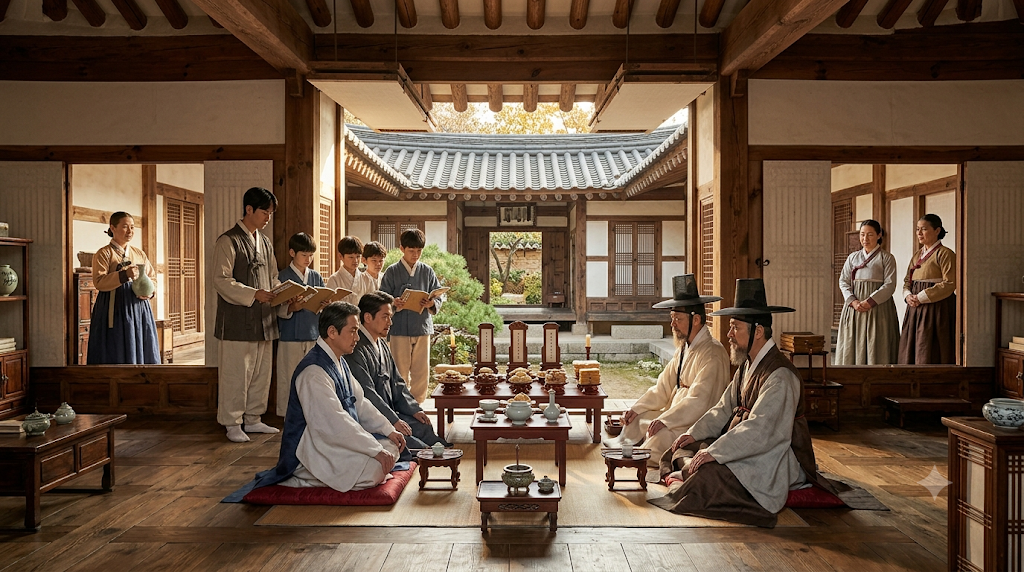
Could Seoja Take the Government Examinations?
This is another reason birth status mattered beyond the home.
Joseon placed enormous prestige on government service.
For elite men, success in the state examination system could lead to official careers and bring honor to the family.
But descendants associated with concubine birth historically faced restrictions on access to certain official opportunities.
These restrictions are often discussed through the broader history of seoeol discrimination.
The rules and their enforcement changed over the long Joseon period, and restrictions were gradually challenged and modified.
But the larger cultural point remains important:
Birth status could affect a talented man’s path into public life.
This makes a familiar historical-drama character much easier to understand.
He studies harder than everyone else.
He is clearly intelligent.
Yet society keeps reminding him that ability alone may not be enough.
To understand why official careers and family background carried so much prestige, it also helps to know what it meant to be yangban in Joseon Korea, where education, government service, lineage, and social reputation were closely connected.
Did Jeokja Automatically Have an Easy Life?
No.
Higher birth status did not guarantee happiness, intelligence, wealth, or political success.
It gave someone advantages within the social and family system.
That’s different.
A jeokja could still:
fail examinations,
lose family wealth,
become involved in political conflict,
disappoint his parents,
or struggle with family responsibilities.
Historical dramas sometimes intentionally reverse audience expectations.
The privileged son may be incompetent.
The disadvantaged seoja may be brilliant.
That’s precisely why the status distinction creates strong drama.
The audience can clearly see the character’s ability.
But the society inside the story sees his birth.
Could a Father Simply Treat His Sons Equally?
Emotionally, perhaps.
Socially, it was more complicated.
A father could care deeply about a son born to a concubine.
He might provide education, financial support, or protection.
But personal affection did not automatically erase the wider family hierarchy.
Other relatives mattered.
The principal wife mattered.
The lineage mattered.
Social expectations mattered.
Rules surrounding official status mattered.
This creates another common K-Drama conflict:
The father loves the son, but the system still limits him.
For international viewers, that distinction is important.
Not every unequal relationship between half-brothers should be interpreted as evidence that their father personally hated one of them.
Sometimes the larger family structure is doing much of the work.
Why Did Lineage Matter So Much?
Joseon family organization became increasingly patrilineal under Neo-Confucian influence.
Family continuity was not only about carrying a surname.
It was connected with:
ancestors,
genealogy,
marriage,
descendants,
ancestral rites,
and the continuation of the household line.
Elite families could maintain genealogical records known as jokbo (족보).
Your place within that family structure mattered.
This helps explain why Korean historical dramas can spend so much time discussing birth circumstances.
To modern viewers, a character’s family tree can feel like unnecessary exposition.
In the Joseon setting, it can function almost like a social map.
It tells you:
Who belongs where?
Who has priority?
Who can inherit status?
Who is considered an appropriate marriage partner?
And sometimes:
Who has reason to resent the entire system?
[IMAGE 4 — DELETE BEFORE PUBLISHING]
What About Daughters?
The terms jeokja and seoja specifically use ja (자 / 子) in reference to sons, but maternal status also mattered for daughters.
You may encounter related terms such as jeoknyeo (적녀) for a daughter of the principal wife and seonyeo (서녀) for a daughter born to a concubine.
For daughters, birth status could matter particularly in relation to family standing and marriage prospects.
Again, this is why the identity of a mother can be so important in historical K-Dramas even when the character is not competing for a government position.
Marriage itself was deeply connected to family status.
A daughter’s birth background could therefore shape how other elite households evaluated her as a potential marriage partner.
Why Does Jeokja vs Seoja Matter in Historical K-Dramas?
Because it creates conflict before the characters even make a decision.
Imagine two brothers.
One is privileged by birth.
The other is more talented but socially disadvantaged.
Now add:
a powerful father,
two mothers of unequal household status,
inheritance,
marriage,
government office,
and family reputation.
You have the foundation for an entire historical drama.
This is why the jeokja vs seoja distinction appears so often in stories about Joseon families.
It gives writers a way to explore:
privilege vs. ability
family loyalty vs. resentment
birth vs. achievement
love vs. social hierarchy
And for Korean viewers familiar with the historical context, the conflict can be understood immediately.
International viewers may need one extra piece of information:
The mother’s status is part of the son’s status.
Once you know that, many scenes suddenly make sense.
These family distinctions are part of the larger Joseon culture behind The Scandal, where lineage, gender, marriage, reputation, and social status all shape what characters are allowed to do.
Does Jeokja vs Seoja Matter in Modern Korea?
Not as a Joseon legal status system.
Modern South Korea does not organize legal rights or access to government office according to whether someone’s mother was a principal wife or concubine.
Concubinage as described in Joseon family structure is historical.
The old status restrictions associated with seoeol are also historical.
That distinction matters.
Historical K-Dramas can make these concepts feel emotionally immediate, but viewers should not assume that a Joseon family hierarchy describes contemporary Korean society.
Today, jeokja vs seoja is primarily useful as historical and cultural vocabulary when discussing Joseon society, genealogy, literature, or period dramas.
Frequently Asked Questions
What does jeokja mean?
Jeokja (적자 / 嫡子) generally refers to a legitimate son born to a man’s principal wife within the traditional family structure.
What does seoja mean?
Seoja (서자 / 庶子) generally refers to a son born to a concubine. His father could acknowledge him, but his position differed from that of a son born to the principal wife.
Were seoja illegitimate children?
“Illegitimate” is an imperfect English shorthand. A seoja could be a recognized son within the household, but his mother’s lower status meant he did not occupy the same position as a principal wife’s son.
Could a seoja become a government official?
People associated with seoeol status historically faced restrictions on certain official careers, although these restrictions and their enforcement changed during the Joseon period and were gradually challenged.
Could a seoja inherit?
Inheritance and succession were shaped by family status, historical period, law, and household circumstances. The principal-wife line held important advantages, so it is misleading to assume all sons inherited equally simply because they shared a father.
Did daughters also have different status depending on their mother?
Yes. Maternal status could also affect daughters, including their position within the family and marriage prospects.
Final Thought
When a historical K-Drama reveals that a powerful man’s son was born to a concubine, that information is rarely meaningless background.
It tells you something about the character’s place in the social world.
He may have the right father.
He may have intelligence.
He may have ambition.
He may even have his father’s affection.
But Joseon family hierarchy could still ask another question:
Who was his mother?
Understanding jeokja vs seoja explains why that single question can change inheritance, marriage prospects, family relationships, and opportunities.
And once you recognize the distinction, one of the most confusing recurring conflicts in Korean historical dramas becomes much easier to understand.